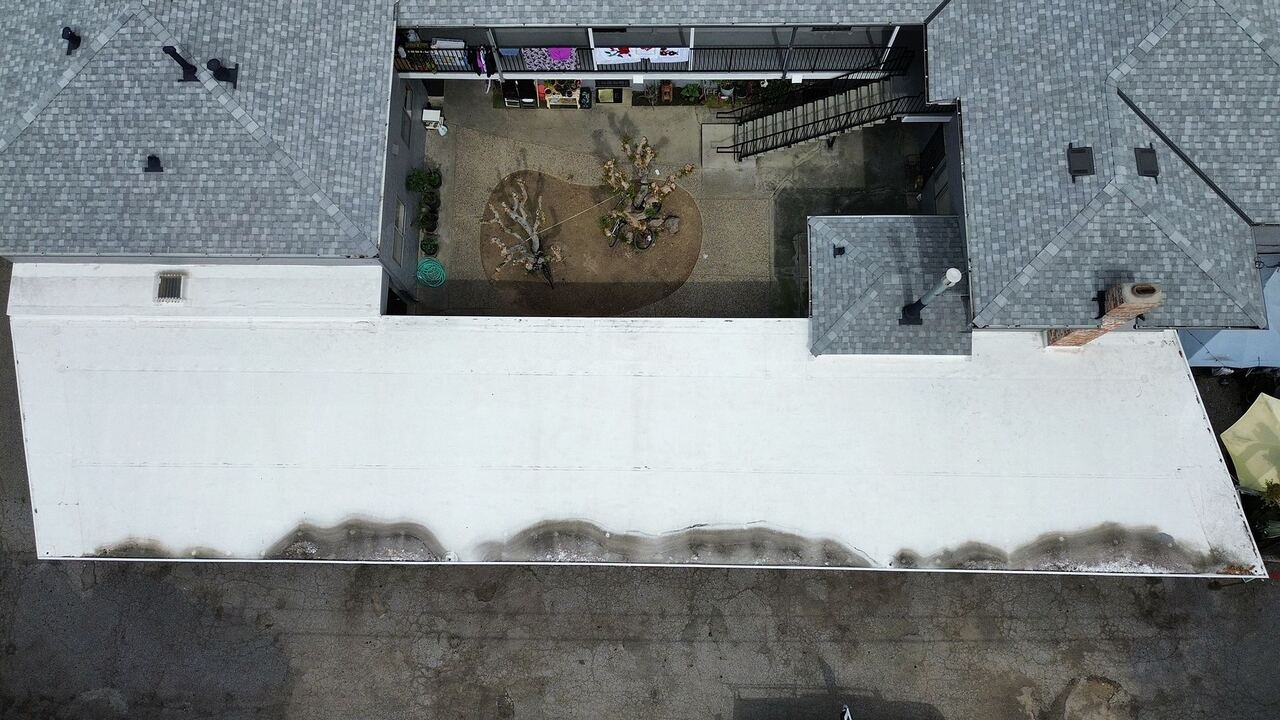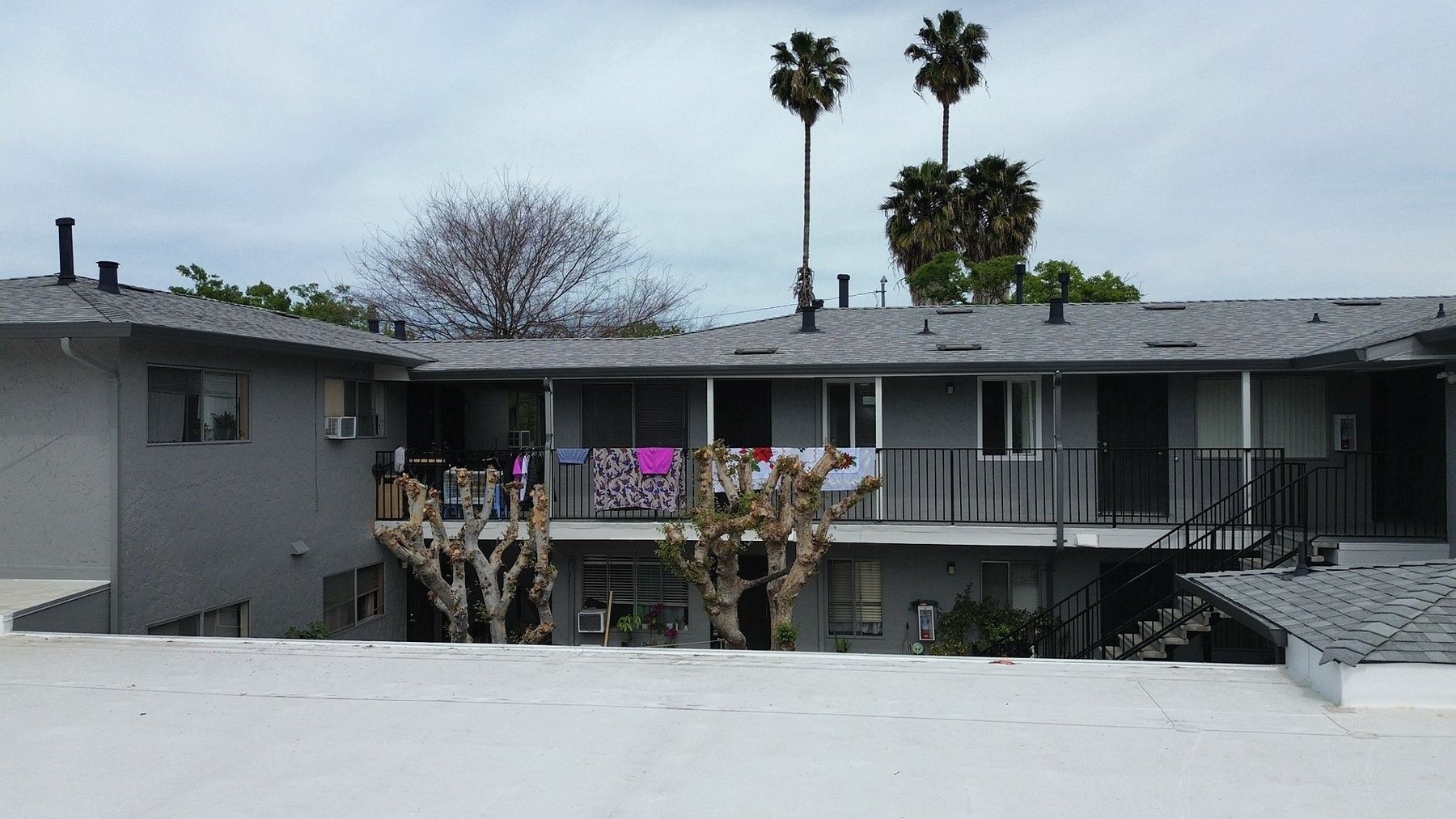
Those proposals often aren't comparing the same thing. Some of them may not even be allowed on your building. This guide covers what the California Building Code permits, what to test before you decide, and which San José, Title 24 and Bay Area Air District rules apply to the job, so you can compare the bids on equal terms. Prices vary too much by building to be useful here, so this guide sticks to the things that decide the scope.
Three Jobs That Get Quoted as One Decision
The words get used loosely on bids, so start with what they mean. California's Energy Code draws the lines clearly, and the same lines decide which rules apply to your job.
- Recoat: a fluid coating applied over the roof for maintenance or repair. Nothing comes off and no new membrane goes on.
- Recover: a new roof covering installed over the prepared existing one, without removing it.
- Replacement: the existing covering comes off, damaged substrate gets repaired and a new covering goes down. Under the 2025 California Building Code that means removing all existing layers of roof assembly materials down to the deck.
There is a fourth answer that gets lost in the conversation, which is to do none of those yet. A roof with one failed seam or a few bad penetration flashings needs a repair, and on many buildings that is the honest recommendation. If that is where your building stands, start with roof repair in San Jose and a maintenance plan. Our San Jose commercial maintenance project shows what that looks like on a modified-bitumen roof carrying a large solar array.
The rest of this guide is for the building where repairs have stopped keeping up. If your flat roof is on a house rather than a commercial building, we wrote a separate guide to residential flat roofs.
When the Code Takes the Recover Off the Table
A recover is the option that looks best on a spreadsheet, because nobody pays for tear-off and disposal and the building stays closed up. But Section 1512.3 of the California Building Code says a recover is not permitted in three situations:
- The existing roof or covering is water-soaked or deteriorated to the point that it is not an adequate base for more roofing.
- The existing covering is slate, clay, cement or asbestos-cement tile.
- The roof already has two or more applications of any type of covering.
The third is the one owners tend to learn late. Older buildings may have been re-covered once already, and the records don't always say so. A core cut answers the question in minutes. If there are two roofs up there, the next one is a tear-off.
San José adds a practical limit of its own. The City's reroof requirements call for an engineering analysis of the roof structure if the total weight of all coverings exceeds 7 pounds per square foot. A heavy built-up roof with gravel can leave little room, so get the existing assembly identified before you price anything on top of it.
Coatings have an easier path. The code allows a new protective coating over an existing coating, built-up roof, modified bitumen, single-ply, spray foam or metal panel without a tear-off. The water-soaked limit is still the one that matters most, as the next section explains.
Find Out What Is Wet Before Anyone Bids
Coating or re-covering a wet roof doesn't dry it. It traps the water in the insulation, where it keeps working on the deck and the fasteners, and it takes the roof outside what the code allows. So the most useful money an owner can spend early is on finding out what is actually under the membrane.
A moisture survey maps wet areas across the whole roof. Infrared imaging is one common method, and ASTM C1153 is the standard practice for using it to locate wet insulation. Whichever method is used, ask for test cuts to confirm the readings. A core also shows how many roofs are up there, what the insulation is, and what the deck looks like.
The result usually sorts the building into one of three outcomes. A dry roof with sound seams is a real candidate for a coating or recover. A roof with limited wet areas may be able to have those sections cut out and replaced first, if the rest is sound and the manufacturer of the new system agrees. Wet insulation across much of the field points to a tear-off, whatever the first bid assumed.
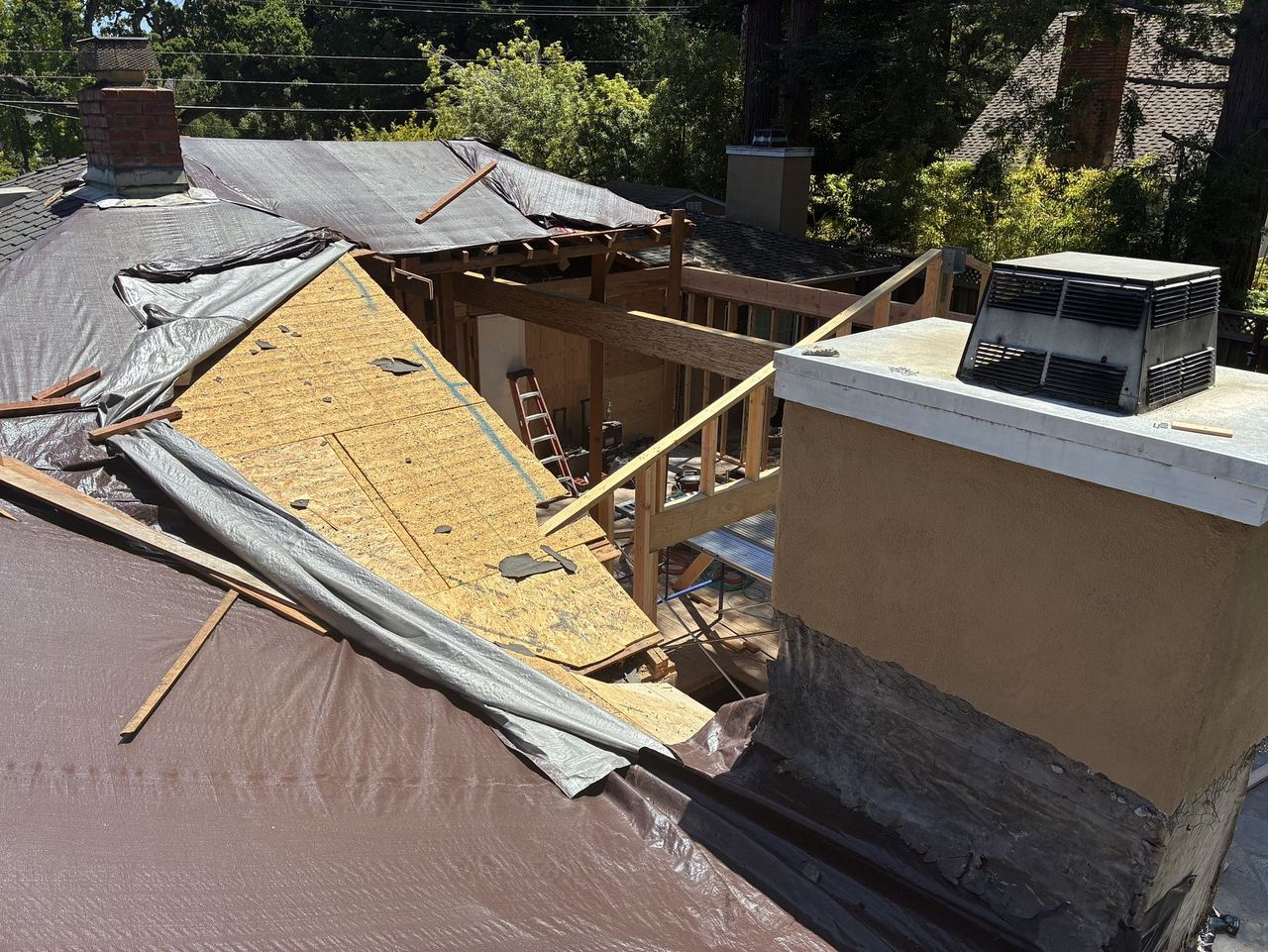
Deck damage is the other thing surveys can only hint at. On our San Jose apartment re-roof, the sheathing and framing were in worse shape than the surface suggested, and the job became new plywood across the roof plus rot repair. Our guide to what a tear-off finds in the deck explains how to budget for that unknown.
The Title 24 Trigger: 50 Percent or 2,000 Square Feet
California's cool-roof rule reaches all three options. On a nonresidential or hotel building, the requirements apply when more than 50 percent of the roof or more than 2,000 square feet, whichever is less, is replaced, recovered or recoated. On a large building, that means a section just over 2,000 square feet is enough.
For a low-slope roof (under 2:12), the California Energy Commission lists the prescriptive requirement as an aged solar reflectance of at least 0.63 and thermal emittance of at least 0.75, or a Solar Reflectance Index of at least 75. In practice that means a light, rated surface, and it needs to be certified and labeled by the Cool Roof Rating Council.
Some details change the answer, so check them before assuming the white product is your only choice:
- Insulation can trade against reflectance. A lower aged reflectance is allowed if the roof meets the maximum U-factor in the code's Table 141.0-B. The Commission notes this tradeoff is intended for rafter roofs.
- Insulation is part of the rule. Low-slope alterations over the trigger carry an insulation requirement as well as a reflectance one. A new top coat over an existing coating is exempt from it, unless the recoat is part of a recover.
- Heavy assemblies are exempt from the reflectance values. Roof constructions of at least 25 pounds per square foot don't have to meet them.
- Unconditioned buildings don't trigger it. The Commission says roof alterations on an unconditioned building do not trigger the cool-roof requirement. Check how your building is actually used, not how it is listed.
- Apartments follow their own section. Multifamily buildings fall under Section 180.2 rather than 141.0. The trigger and the low-slope numbers are the same in San Jose's Climate Zone 4, according to the Cool Roof Rating Council's chart of the 2025 code.
- Pitched sections have their own values. If the building mixes flat and steep roofs, each portion has to meet the requirement for its slope.
Compliance on nonresidential work is documented on the state's NRCC-ENV forms. A small leak repair does not need a rated product, so none of this should stop you from fixing a leak this week.
San José's 25 Percent Rule on a Commercial Building
The City of San José requires a building permit when 25 percent or more of the roof is reroofed in any 12-month period. Below that, the City treats the work as a repair and no permit is needed. Three points matter on commercial property:
- The 12-month window catches phased work. A roof replaced in sections over one budget year adds up.
- Each structure is counted separately. A complex with several buildings needs a separate permit for each structure over the 25 percent line.
- Rooftop equipment brings its own permits. Replacing, altering or removing solar or other rooftop equipment also requires electrical or mechanical permits.
Every application starts at SJPermits.org, where the City's wizard either issues an online permit or says that Planning or Building review is needed first. The faster over-the-counter reroof service is limited to single-family and duplex properties, so a commercial or multifamily job sent for review goes through Standard Plan Review, which has its own submittal checklists. Build that time into your schedule, especially if you are hoping to finish before a storm. A property on the City's Historical Resources Inventory also needs Planning clearance first.
The City also warns that insurers may deny claims related to unpermitted work, which is reason enough to have the permit in your closeout file. If your building is in Sunnyvale or Santa Clara, confirm the rules with that city's building department, since each runs its own permit process.
Older Roofs Need an Asbestos Answer First
This is the step that can quietly add two weeks to a tear-off. The Bay Area Air District lists roofing among the places asbestos can be found, and it warns that newer buildings can contain it too. Under Regulation 11, Rule 2, a renovation or demolition on anything other than a residential building of four or fewer units needs a prior survey by a Cal/OSHA-certified person, including sampling and lab results, unless the owner chooses to treat the material as regulated.
If the survey finds regulated material and 100 square feet or more will be removed, the owner or contractor must notify the Air District at least 10 working days before work starts. Whether a nonfriable asphaltic roofing product counts as regulated can depend on how it is removed, so have your consultant and your roofer agree on the method before the schedule is set. Abatement itself requires a contractor with California's asbestos certification.
The Air District also says that asbestos in good condition and left undisturbed is best left alone. That can count in favor of a recover or coating on a roof that qualifies, but the material stays in the building, and the next owner will face the same question. Keep the survey with your building records.
Ponding, Drains and What a Tear-Off Can Fix
San Jose's dry summers can hide a drainage problem for years. Then the first long storm sits on the roof for days and finds every weak seam. Before you choose, have someone go up just after a rain and look at where the water stays.
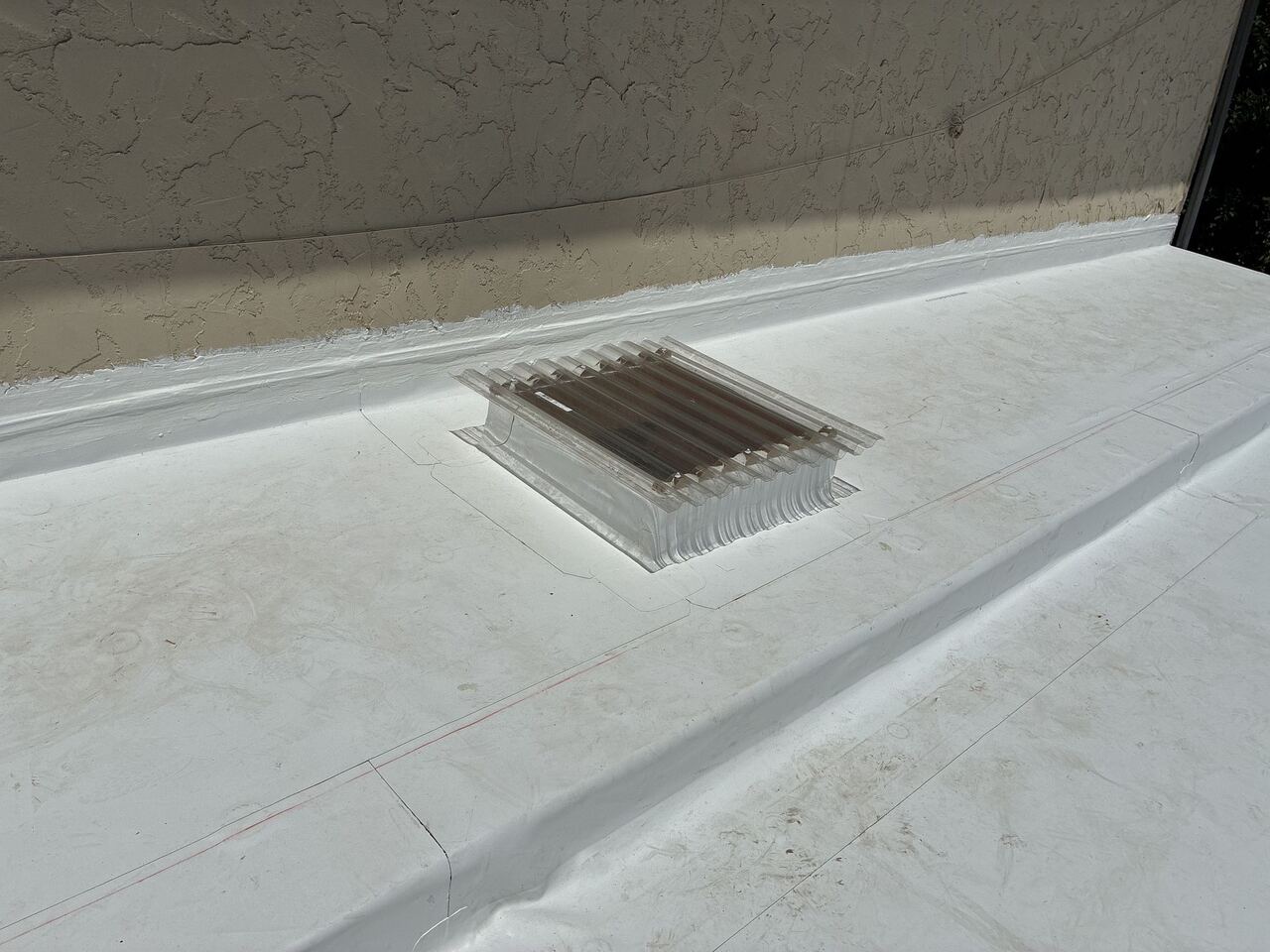
The code gives existing roofs some room here. Under Section 1512.1, a recover or replacement of a low-slope roof does not have to meet the 1/4-in-12 minimum design slope, or add secondary (emergency overflow) drains or scuppers, if the roof provides positive drainage and meets the structural sections the code cites. Existing secondary drains can't be removed unless they are replaced with compliant ones.
The code's allowance doesn't mean ponding is fine. A coating follows the shape of what is already there, so it keeps the same low spots, and a recover does too unless tapered insulation goes in with it. A tear-off is the natural moment to correct them, reset the drains, and rebuild the curbs and skylight flashings that have collected thirty years of patches. Rusted or damaged metal edging, collars, drain outlets and counterflashings can't be reinstalled in any case, and neither can the old aggregate from a built-up roof.
Solar, Tenants and the Rest of the Schedule
Rooftop solar changes the math more than almost anything else. A ballasted or racked array usually has to be taken off and reset for a full replacement, which brings in the solar contractor and an electrical permit. A coating may be workable around it, as long as the work under the array isn't simply skipped. If a new array is still in the planning stage, deal with the roof first. Our guide to roof work before solar was written for houses, but the sequence holds here too.
A tear-off has to be sequenced so that everything opened in a day is weathered in by nightfall, and rooftop HVAC, antennas and conduit each need a plan. A recover or coating is usually gentler on tenants, though it still brings noise, odors from some products and limits on rooftop access. Ask each bidder for a phasing plan in writing, and ask how they would protect the building if rain arrives mid-phase.
Two questions are worth asking outside the roofing bid. First, ask the manufacturer of any proposed system, in writing, what it requires before it will warrant a recover over your existing roof. Second, ask your CPA how the work should be treated. IRS Publication 946 lists roofs among the improvements to nonresidential real property that can qualify for the Section 179 election, but that doesn't extend to every building or every owner, and repair versus improvement is a separate question.
Putting the Decision Together
Done in this order, the three proposals usually stop competing with each other:
- Identify the roof. Pull permit history at SJPermits.org, take core cuts, and count the layers.
- Survey for moisture. Map it and confirm it with test cuts.
- Test for asbestos on anything that will be disturbed.
- Check the rules. Compare the area of work with the 25 percent permit line and the Title 24 trigger, and check the weight limit if you are adding a layer.
- Then compare bids on the same scope, with the same insulation, the same warranty and the same treatment of drains and flashings.
If the roof is dry, sound and draining, a coating or recover can be the right call, and we'll say so. If the survey shows wet insulation or a second roof already in place, the choice is commercial roof replacement, and the remaining question is which system. We install single-ply, modified bitumen and built-up roofs, and our coating service covers the restoration side. Keith Roofing has worked on South Bay roofs since 1952. If you would like a second opinion on a proposal you already have, send it over and we'll walk the roof.
Frequently Asked Questions
Need professional help with your roof? Keith Roofing Company has been serving San Jose and the South Bay since 1952. We offer free estimates, honest recommendations, and work that's backed by BBB A+ Accreditation and CSLB License #1118418. Schedule a free estimate or call (408) 295-8616.