They are also one of the most misdiagnosed leaks we see. Some "skylight leaks" are not leaks at all, some are flashing failures that a new skylight would not fix, and some are a worn-out unit that no amount of new flashing will save. This guide walks through how to tell which one you have, what the California Residential Code asks of skylights on low-slope roofs and of replacement units, and how to decide between re-flashing, replacing and removing.
Leak or Condensation?
Before anyone goes up a ladder, it is worth working out whether the water is coming from outside at all. Skylights are colder than the ceiling around them, and on a cold winter morning warm, damp air from a bathroom, kitchen or a house full of people condenses on the glass and the light shaft, then drips. It looks exactly like a leak.
A few clues separate the two:
- Timing. A roof leak follows the rain, and often only the heavy, wind-driven storms. Condensation follows the weather and the household: cold, clear mornings, after showers or cooking, and it can appear when it has not rained for days.
- Pattern. Condensation tends to bead evenly across the inside of the glass or frame and run down to the bottom edge. A leak usually shows up at one corner or one side, often the uphill one, and may stain the drywall of the light shaft in a line.
- Location in the house. A skylight over a shower or a busy kitchen is a prime condensation candidate. One over a hallway that drips only during storms is almost certainly a leak.
Condensation is a ventilation and humidity problem, not a roofing one. A bathroom fan that actually runs, and an attic that breathes properly, does more for it than any flashing. Our guide to attic ventilation on San Jose roofs covers the intake-and-exhaust balance that keeps moisture out of the roof space. If the water only arrives with the rain, keep reading.
Where Skylights Actually Let Water In
On a pitched roof, a skylight interrupts the overlap that makes a roof work in the same way a chimney does: water running down the slope meets a raised box with nowhere to go. When we trace a skylight leak, we check four places separately.
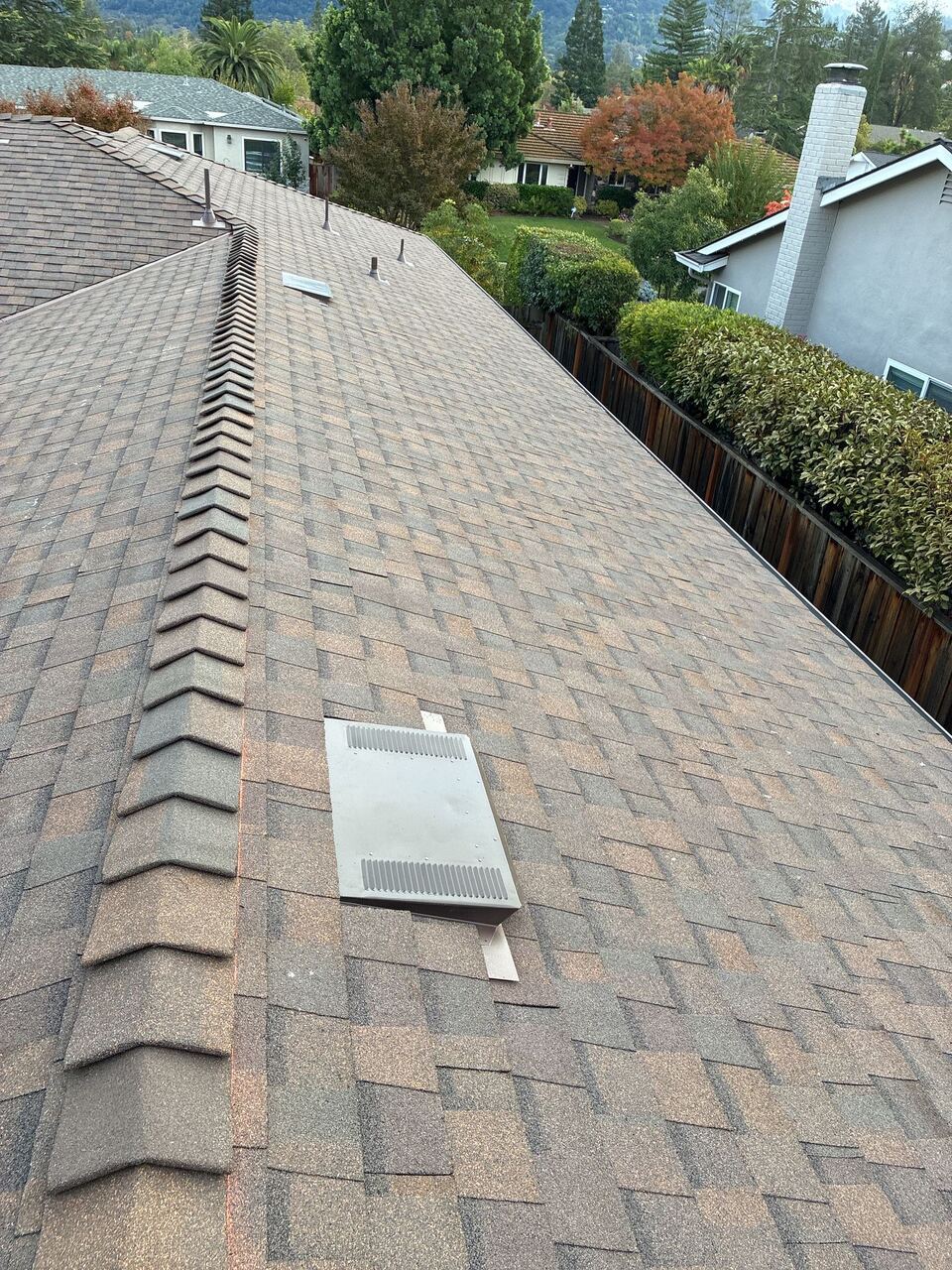
The flashing around the curb or frame. A properly installed skylight on a shingle roof is flashed much like a chimney: a head flashing on the uphill side, step flashing woven in with each shingle course along the sides, and a sill or apron flashing on the downhill side lapping over the roofing below. Most manufacturers sell a flashing kit matched to their unit. On older homes, we regularly find skylights that were set in a bed of roofing cement with a single piece of bent metal around them instead, which works until the cement dries out.
The uphill side. Leaves, pine needles and grit collect against the head of a skylight just as they do behind a chimney, holding water against the flashing for days after a storm. Galvanized flashing rusts through there first.
The unit itself. Older plastic dome skylights become brittle, cloudy and cracked after decades of UV exposure. Glass units can lose the seal between panes, which shows up as fogging between the layers rather than water in the room, and frames and gaskets can crack or shrink. A unit that has failed lets water through no matter how good the flashing is.
The deck and framing around the opening. When a skylight has leaked slowly for years, the sheathing around the curb is often soft by the time anyone looks. On our Almaden Valley tile lift-and-relay, the rotted decking we found was concentrated at two places, around the chimney and the skylight openings, which is the classic sign of a long-term leak at a roof opening. Soft sheathing at a skylight has to be cut back to sound wood, and the curb rebuilt on top of it, before new flashing can do its job; our write-up on roof deck repair and dry rot in San Jose shows what that looks like once the roofing is off.
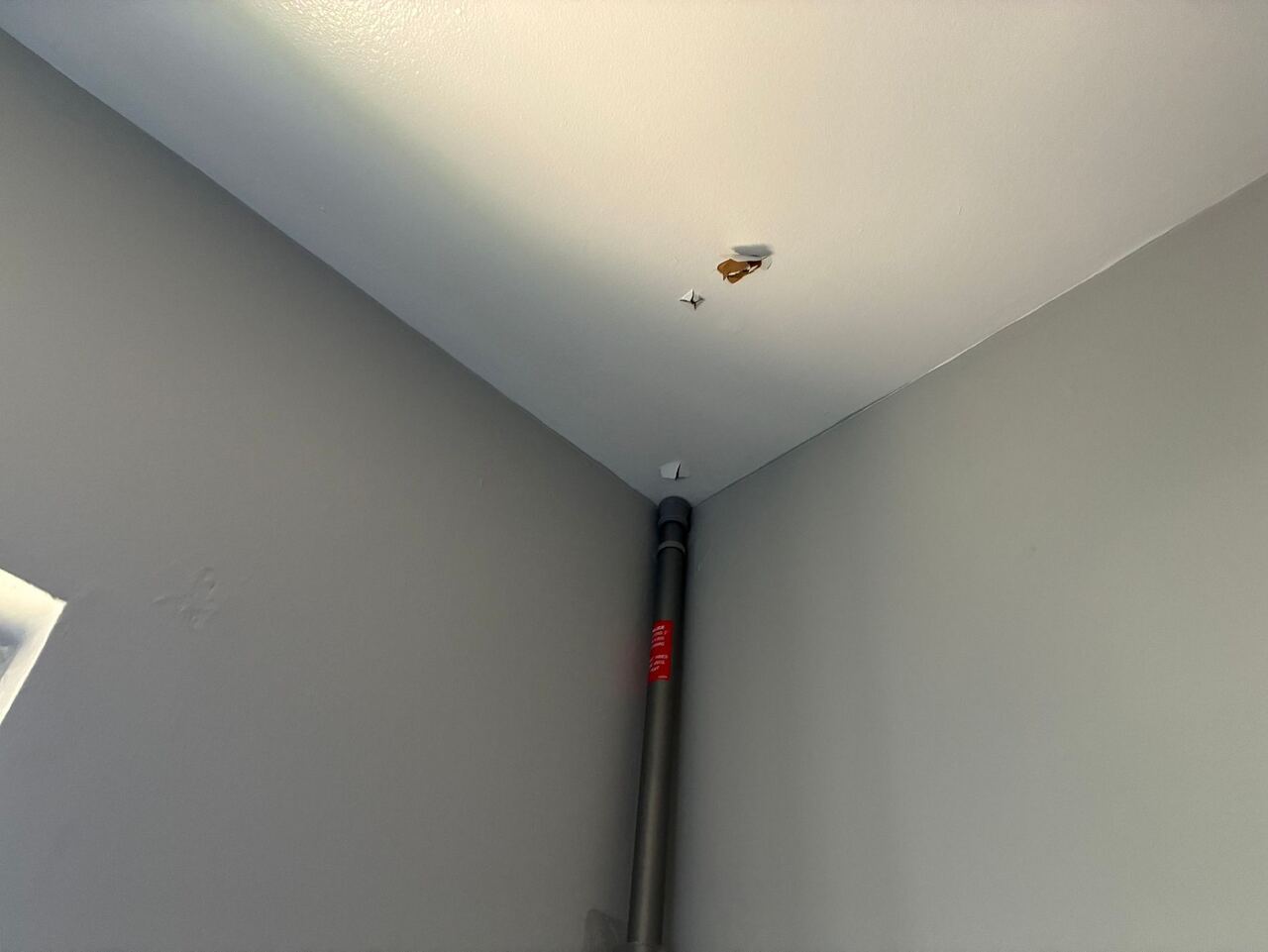
Indoors, the light shaft usually gives a skylight leak away: a brown streak down one wall of the shaft, paint bubbling where the shaft meets the ceiling, or swollen trim around the opening. Water that gets behind the curb can also follow the shaft framing and surface on the ceiling beside the skylight rather than at the glass. If water is dripping into the room today, start with our steps for a roof leak in progress, then come back to the diagnosis once the room is protected.
Skylights on Flat and Low-Slope Roofs
Skylights are common on the South Bay's flat and low-slope roofs: Eichler neighbourhoods, flat-roofed additions, and the low-slope sections over family rooms on many mid-century ranch homes. Water moves slowly on those roofs, and sometimes sits, so how the skylight is raised above the roof surface matters a great deal.
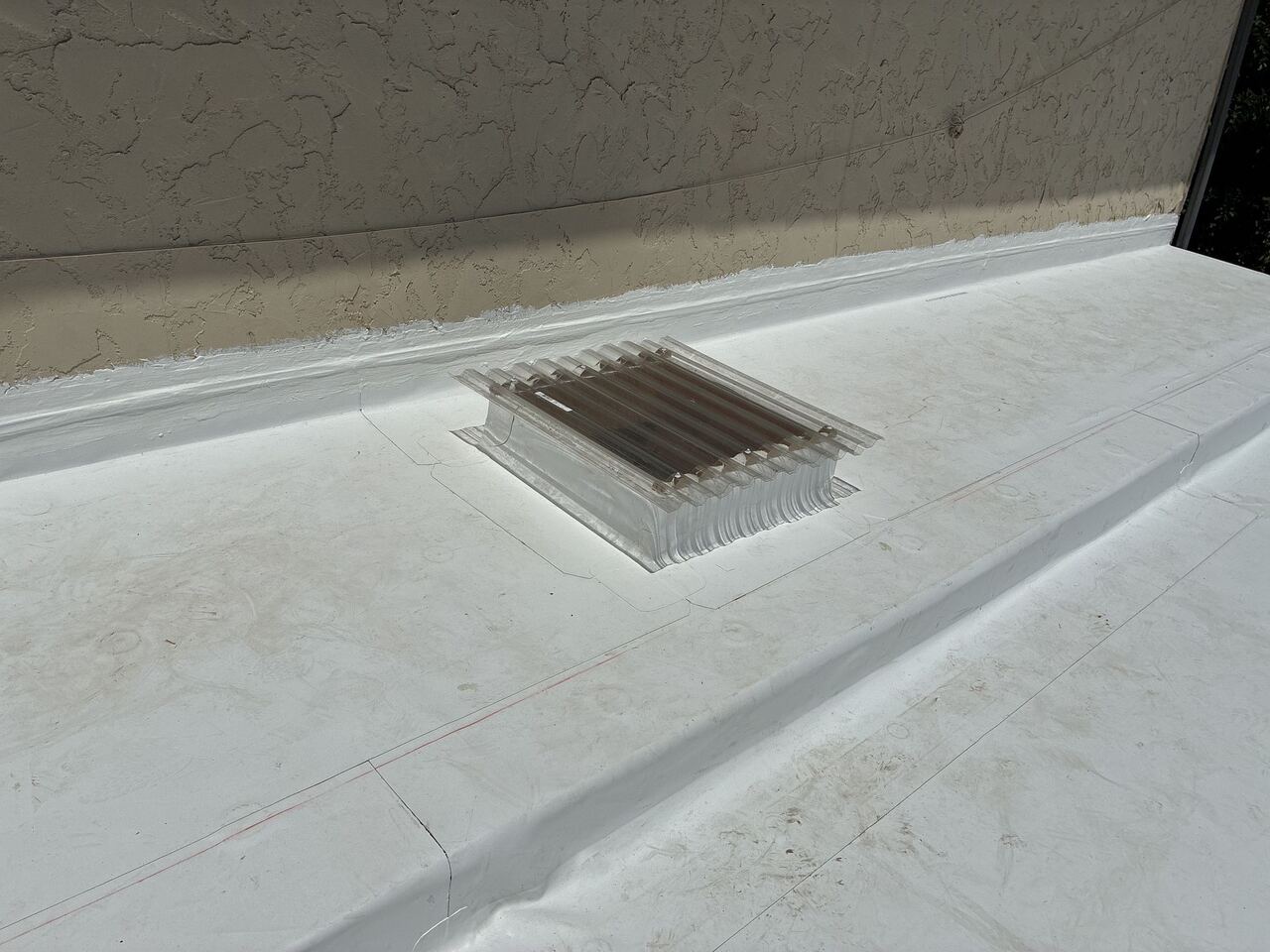
The California Residential Code addresses it directly. Section R324.6.8 of the 2025 CRC requires a unit skylight installed in a roof with a pitch of less than 3 in 12 to be mounted on a curb extending at least 4 inches above the plane of the roof, unless the manufacturer's installation instructions specify otherwise. A skylight mounted nearly flush with a low-slope roof, with its edge at or just above the membrane, is exactly the detail that leaks every time a storm leaves water standing around it.
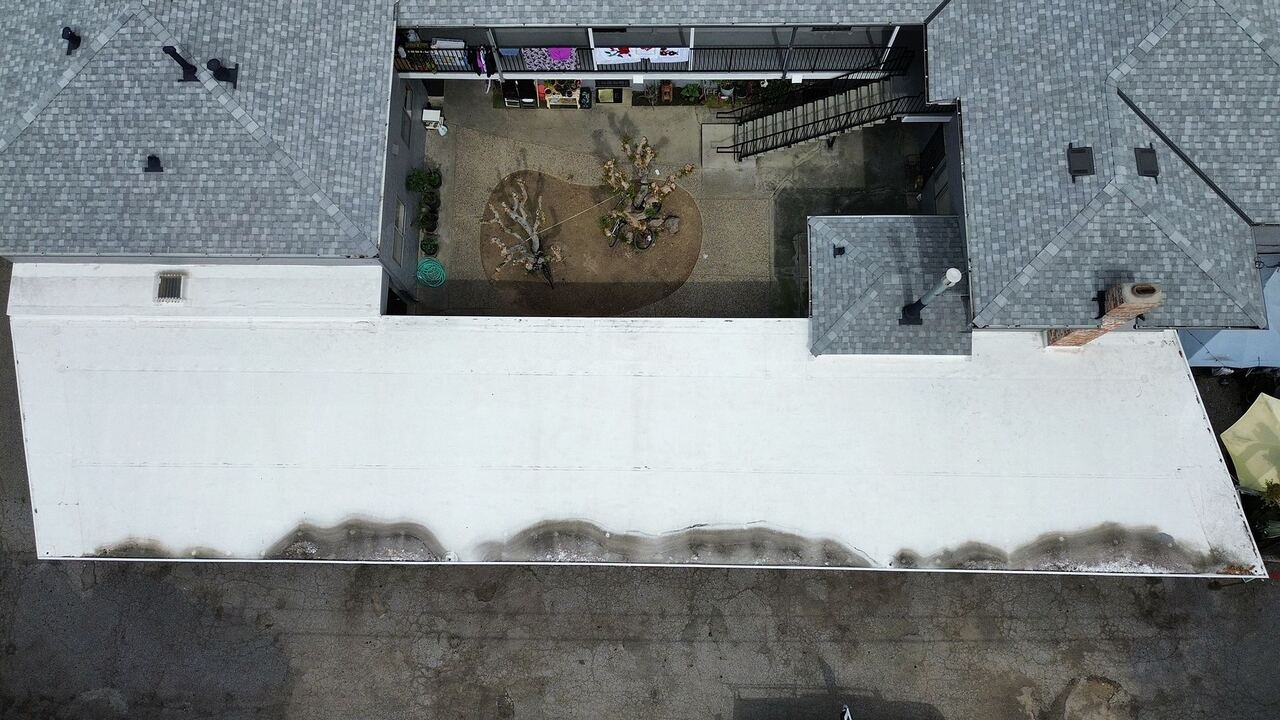
On a flat roof the curb is wrapped in the roofing membrane itself, with the corners reinforced, so the waterproofing runs continuously up the side of the curb and under the skylight's frame. On our San Jose apartment re-roof, the photo at the top of this page, each skylight and penetration was detailed into the new single-ply membrane with heat-welded patches. The same principle applies to a home's flat roof. Our guide to repairing, coating or replacing a flat roof covers why a re-roof is the right time to deal with tired skylights on these roofs, rather than re-flashing an old unit into a brand-new membrane.
Why the Caulk Fix Doesn't Last
The most common thing we find on a skylight that "keeps leaking" is layers of sealant: roofing cement smeared over the flashing, caulk run around the frame, sometimes both, applied one rainy season after another. Each application works for a while. Then a few South Bay summers dry it out, it shrinks and cracks away from the metal or the plastic, and the leak comes back, usually a little worse, because water has been getting under the sealant into the deck.
How a skylight is mounted decides what should be keeping it dry. A curb-mounted skylight sits over a raised wooden box built on the deck, so the step flashing runs up the sides of that curb with each shingle course and the unit's own frame laps down over the metal. A deck-mounted skylight fastens straight to the sheathing and depends on the flashing kit made for it. In both cases the water is turned by overlapping metal, not by a bead of caulk. A skylight that only stays dry because of sealant will leak again, and the wood around the opening is usually soft by the time anyone opens the roofing.
Re-Flash the Skylight or Replace It?
Once the leak is traced to the skylight, the decision comes down to the condition of the unit and the age of the roof around it.
Re-flashing makes sense when the skylight itself is sound (clear, uncracked, with a solid frame and intact seals) and the roof around it has years of life left. A proper re-flash means removing the roofing around the skylight, installing new head, step and sill flashing (or the manufacturer's kit), and re-roofing that area. It is targeted roof repair in San Jose that our crews do throughout the rainy season.
Replacing the unit makes sense when the skylight is brittle, cracked, cloudy or fogged between the panes, or when it is an older plastic dome that will not survive having the roofing around it disturbed. Paying for new flashing around a skylight that will need replacing in a few years means opening the same hole twice. And because a replacement unit comes with flashing designed for it, the flashing is renewed at the same time.
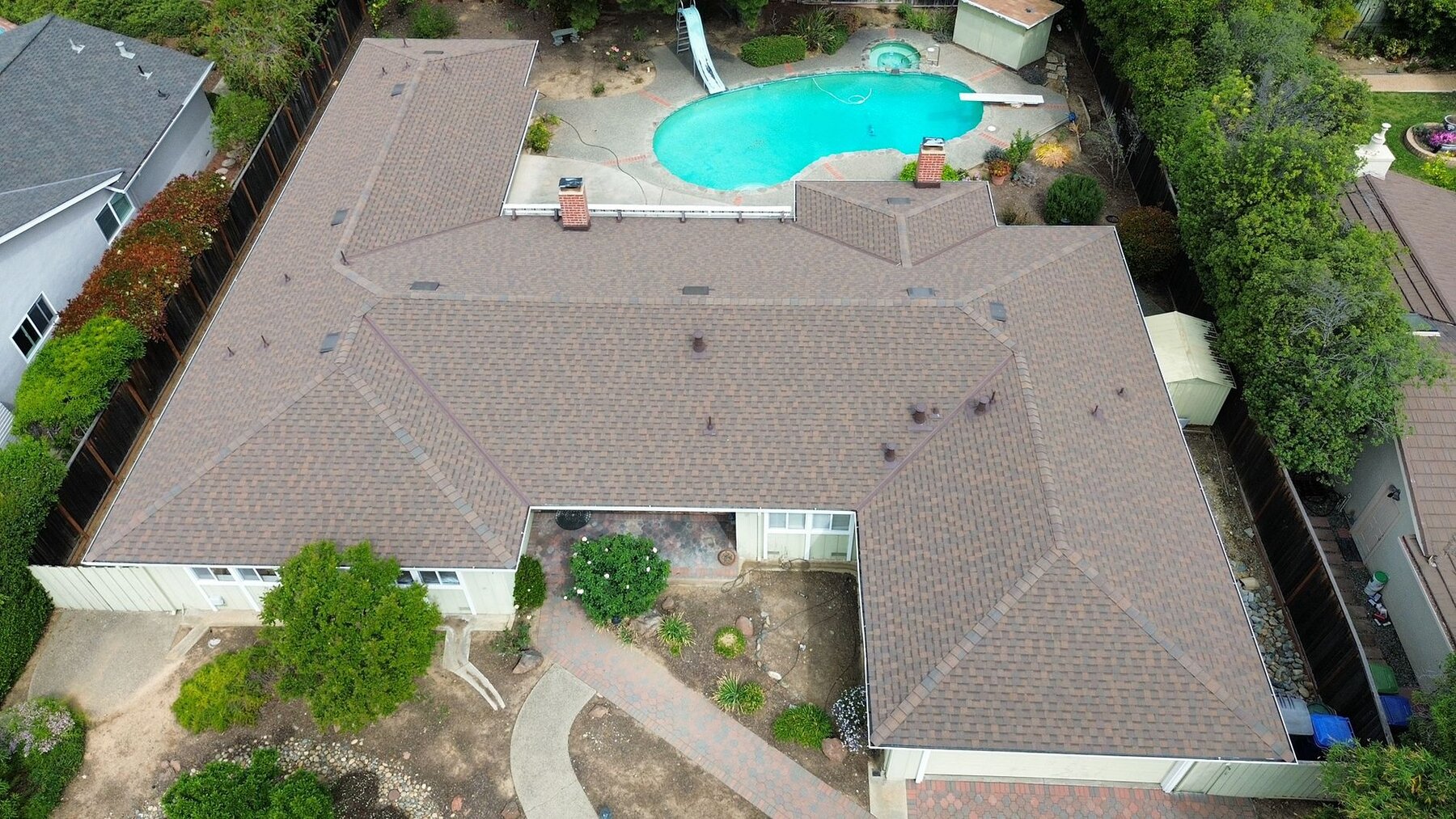
On a tile roof the logic is the same, but the flashing details differ, with pans and channels that run under the tile rather than step flashing woven between shingles. Skylight flashing is part of the full flashing renewal in a tile lift-and-relay, as it was on the Almaden Valley job, and an older tile roof that is due for one is the obvious time to replace an ageing skylight.
On our Castlemont Avenue re-roof in Cambrian Park, the chimney and skylight were both re-flashed into the new architectural shingle roof. That is the standard to expect on any re-roof bid: skylight flashing listed as its own line, not assumed.
What a Replacement Skylight Has to Meet
A replacement skylight is not just a matter of finding one that fits the opening. Three sets of rules apply in California.
Labelling. Section R324.6.9 of the 2025 California Residential Code requires unit skylights and tubular daylighting devices to be tested by an approved independent laboratory and to carry a label identifying the manufacturer, the performance grade rating and the inspection agency, showing compliance with the AAMA/WDMA/CSA 101/I.S.2/A440 standard. An unlabelled, no-name unit is a problem at inspection.
Glazing. Section R324.6.2 limits skylight glazing to laminated glass, fully tempered glass, heat-strengthened glass, wired glass, or approved rigid plastics. Depending on the glass type, size and height above the floor, some glass skylights also need a screen underneath to catch broken glass. Reputable residential units are built to these rules, but it is one more reason to buy a skylight from a manufacturer that labels its products rather than improvising one.
Energy performance. Skylights count as fenestration under California's Energy Code. The California Energy Commission's 2025 compliance manual for single-family alterations lists a maximum U-factor of 0.40 and a maximum solar heat gain coefficient of 0.30 for replacement skylights on the prescriptive path. In San Jose's hot summers, the SHGC limit matters as much as the U-factor, because a big, clear, unshaded skylight can heat a room noticeably. The rated values are on the unit's label, and the building division issuing your permit is the place to confirm how your project complies, especially if you are adding skylight area rather than replacing it. Our Title 24 cool-roof guide covers the roofing side of the same energy code.
Removing a Skylight Instead
Some homeowners decide they would rather not have the skylight at all, especially an old one in a room that gets too hot in July. Removing a skylight is a legitimate option, and a re-roof is by far the easiest time to do it. The opening is framed in, sheathed to match the surrounding deck, and roofed over as part of the new roof, with no extra flashing left to maintain. The ceiling and light shaft then have to be closed and finished inside, which is drywall work rather than roofing, so plan for that trade as well.
A middle path is a tubular daylighting device, a small tube with a reflective lining that brings light down through a much smaller hole in the roof. These units fall under the same labelling rule as skylights and are flashed into the roof the same way, but they put a much smaller opening in the deck.
Fix It Now or Wait for the Re-Roof?
A sound skylight on a roof with years still to run only needs its own flashing put right. That is a contained job: the shingles around the curb are opened, new metal goes in, and the courses are laid back. Our roof leak repair crews do it without disturbing the rest of the roof.
When the roofing itself is close to worn out, it rarely pays to flash a skylight into it. Keep the skylight dry for this winter, then plan a roof replacement in San Jose that renews every skylight, chimney and wall flashing together and lets you replace or remove any unit that is past its prime. To judge how many years your current roof has, see our San Jose roof lifespan guide. Chimneys raise a similar question, and our chimney leak guide covers them.
Whoever bids the work, three questions are worth asking:
Is the skylight being re-flashed with new metal or a manufacturer's kit, or just sealed?
On a low-slope roof, will the skylight sit on a curb at least 4 inches tall, and does the bid add one if the current unit is mounted nearly flush?
What if the sheathing around the opening is soft? A skylight that has leaked for a few seasons often has some, so the bid should say how much wood it allows for and how anything beyond that will be charged. Our guide to hiring a roofer in San Jose explains how to read the extra-work terms in a contract.
If you are not sure whether the problem is the flashing, the unit or condensation, a roof inspection checks the skylight, its flashing and the deck around it, and tells you which one you are dealing with. To book one, request a free estimate or phone (408) 295-8616.
Frequently Asked Questions
Need professional help with your roof? Keith Roofing Company has been serving San Jose and the South Bay since 1952. We offer free estimates, honest recommendations, and work that's backed by BBB A+ Accreditation and CSLB License #1118418. Schedule a free estimate or call (408) 295-8616.